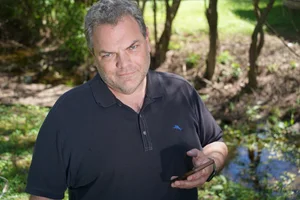
Tom Paladino, Scalar Energy and a Conversation I Never Expected to Revisit
Tom Paladino, Scalar Energy and the Questions He Left Behind
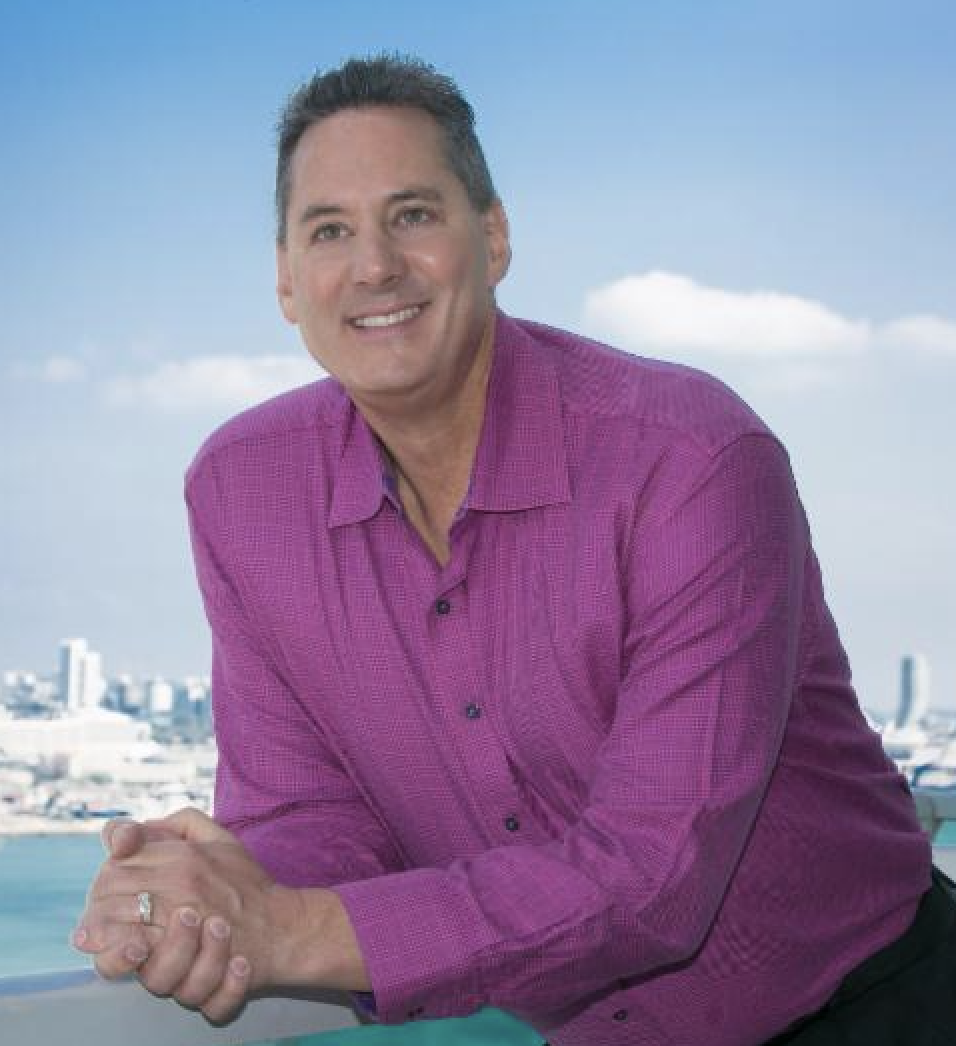
Tom Paladino
When I interviewed Tom Paladino in 2023, I had never heard of scalar energy, could barely pronounce the word, and certainly had no idea that the man explaining it to me would be dead a little more than a year later. What followed was thirty-six minutes of one of the stranger conversations I have had, moving from Nikola Tesla and the energy of the stars to God, quantum entanglement, vitamins created inside the human body, free energy, nuclear waste, Terminator 2 and whether humanity might someday learn to rearrange matter itself.Tom made claims that were difficult to believe, and I questioned him about them. Then, in the middle of everything he believed he had discovered, he gave me an answer I did not expect: "I cannot prove my work." I remember the conversation differently now because Tom is gone, but I do not believe respecting the man requires pretending his theories were proven. If anything, listening to him again raises a more interesting question: what do we do with someone who sincerely believes he has discovered something extraordinary when the evidence has not yet caught up with the belief?I wasn't a believer, I wasn't a debunker, and I certainly wasn't sitting there pretending I had spent twenty years studying some obscure corner of theoretical physics. Tom had spent a significant portion of his life pursuing something he believed was real, important and potentially capable of changing the world, while I had essentially just walked into the room and said, "Okay, what the hell is this?"That was actually one of the reasons I wanted to talk with him.Tom Paladino died in September 2024, after suffering a serious fall at home that resulted in a brain bleed from which he did not recover. According to the account his wife, Nita, later shared through the Scalar Light organization, Tom died on September 2, 2024, at age 64.Knowing that now does not make me suddenly believe everything Tom told me.It does make me hear the conversation differently.
I Had Never Heard of Scalar Energy
I started by asking Tom the most basic question possible: Who are you, and what exactly do you do?"I'm a scalar energy researcher."Simple enough.Then Tom started explaining what that meant, and things became considerably less simple. He told me he believed there were two fundamentally different forms of energy. One was the electromagnetic spectrum we already know how to observe and manipulate, while the other was what he called the scalar energy spectrum."I work with an energy dimension outside of electricity and magnetism."Tom traced his interest back to reading about Nikola Tesla when he was young. He believed Tesla's later experiments with what Tesla called radiant energy represented work with the same phenomenon Tom would eventually call scalar energy. Whether Tesla's work actually supports Tom's interpretation is another question, and I would not present that connection as established physics, but it was central to the way Tom understood his own work.He described scalar energy as the energy of the sun and stars, but he went considerably further than saying there might be another form of radiation floating around the universe. Tom believed scalar energy contained intelligence, instructions that somehow organized matter itself."Scalar energy is the fundamental force that created and maintains the universe."That is one hell of a claim.Naturally, I kept asking questions.
Then He Showed Me the Machine
Tom had developed instruments that he said could control scalar energy, and during our conversation he actually held one up and showed it to me. He told me the instruments were modeled in part on the work of Galen Hieronymus and that he believed they could assemble or break down molecular structures.This was the point where the conversation left "interesting theory" territory and wandered straight into science fiction.Tom told me that his instrument could essentially manipulate matter.I asked him if that meant you could build a house out of a pile of mud.He said yes.That is when I knew we were going to have some fun with this.Tom held up vitamin B6 and explained that he could take a magnified photograph of it, place that image inside his instrument and use the information represented in that photograph to recreate the molecular structure of B6 inside a person's body.My immediate contribution to the advancement of theoretical physics was pretty simple:Free vitamins.But then I started thinking about what he was actually claiming. If you are rearranging atoms inside somebody's body, how do you control what gets rearranged? How do you make vitamin B6 without accidentally turning something useful into vitamin B6? Where does the required material come from, and how does the machine distinguish between atoms that are available and cells that the person probably needs to remain alive?Tom maintained that his process was gradual, targeted and informational rather than chemical. According to him, the instrument simply instructed available elements such as hydrogen, carbon, nitrogen and oxygen to assume a different molecular structure."We're not drawing down on energy. We're simply rearranging matter."That explanation did not prove that the process actually happened, of course. We did not measure someone's vitamin B6 level, run Tom's instrument and then demonstrate that the level had changed because atoms inside that person's body had been reorganized. Tom was explaining what he believed his device was capable of doing.That distinction matters.It also did not stop us from following the idea wherever it went.
Somehow We Got to Terminator 2
One of my favorite movies is Terminator 2, so naturally I brought up the liquid-metal T-1000 and asked whether something capable of changing physical form like that would require the kind of control over matter Tom was describing.Tom essentially said yes.To him, physical structure followed information, and if you could control the instructions behind matter, you could eventually control the matter itself. Later we got into radioactive waste and whether the same technology could theoretically break dangerous substances down into harmless elements. Tom believed that was possible too, and somewhere during that part of the conversation he gave me what is probably my favorite description of his own work."I'm an alchemist with a scalar energy instrument."At least he had a sense of humor about how bizarre some of this sounded.Tom's imagination did not stop at getting rid of nuclear waste. If his basic premise was correct, he believed scalar technology could someday manufacture materials instead of mining them, provide energy without conventional fuel, reduce the need for enormous energy infrastructure and eventually change the economics of scarcity itself.We went from vitamin B6 to ending poverty remarkably quickly."This would eliminate poverty."Was that realistic?I had no idea.But by this point I was not particularly interested in stopping him. I wanted to see where the idea went.
Then We Got to God
The more Tom described scalar energy as something containing intelligence and instructions, the more obvious another question became.Who or what wrote the instructions?I asked him.Tom was a Christian, and his answer was God.There was no hesitation and very little attempt to separate his religion from his theory. Tom believed the universe ultimately required an uncreated being responsible for creation, and he believed scalar energy was somehow connected to that creative process. He described it as an energy that permeated everything and transcended time and space, and in his worldview those characteristics pointed toward something divine.That was where I told him we had wandered into a problem.The metaphysical cannot easily be proven.Tom agreed.And then he said something I find much more interesting today than I did when we originally spoke."I cannot prove my work."He just said it.No dancing around the problem. No pretending everybody who disagreed with him was part of some enormous conspiracy. No claiming that the proof was obvious and scientists were simply too stupid to recognize it.He could not prove it.His explanation was that the energy he claimed to work with was nonphysical and therefore could not be detected using instruments designed to detect electromagnetic phenomena. I brought up the history of radiation and the fact that human beings have encountered things before that we did not initially possess the equipment to detect, and I told him I was open-minded enough to acknowledge that something could exist before we developed a reliable way of measuring it.But eventually, I told him, we have to find that method.Provable detection.Tom agreed with me.That moment probably describes my position on the entire conversation better than anything I could write now.Maybe.Show me.
There Is a Difference Between Skepticism and Ridicule
I have never understood why unusual ideas have to immediately become a tribal exercise. Someone proposes something outside conventional science and one group instantly announces that he has discovered the secret the establishment has been hiding, while another group declares that the man is obviously an idiot and anybody willing to listen to him must be an idiot too.Those are both remarkably lazy positions.I did not know whether Tom was right, and I still don't believe the evidence establishes that he was, but I wanted to know why he believed it. There is nothing intellectually dangerous about listening to somebody explain an idea you do not accept. In fact, I would argue that an inability to listen to an idea without immediately adopting it or becoming terrified of it says considerably more about the listener than it does about the idea.Tom certainly did not seem bothered by my questions. When I pushed his theory somewhere strange, he followed me. When I asked about its weaknesses, he answered. When I pointed out that the metaphysical could not be demonstrated easily, he acknowledged it. When I asked how his claims could eventually become scientifically meaningful, he agreed that evidence was necessary.We disagreed without apparently needing to dislike each other.I miss that kind of conversation.
Where My Skepticism Becomes More Serious
Talking about some undiscovered energy of the stars is one thing.Talking about human health is another.Near the end of our conversation, Tom explained that people could send his organization a photograph and that his instruments could supposedly interact with them remotely through that image. His explanation relied on what he described as quantum entanglement."Your photograph is quantum entangled with you."Tom believed the photograph retained what he called a person's scalar signature and that his instruments could use it to affect that individual remotely.Then his claims became medical."We'll assemble nutrients in your body."He went further, telling me his system could identify microbes, viruses and bacteria and eliminate them through the same process.Those claims need considerably more than testimonials.Quantum entanglement is a genuine phenomenon studied in quantum physics. That does not mean a photograph remains quantum-entangled with the person pictured in it in a way that allows someone to alter that person's biology from thousands of miles away. The existence of one scientific phenomenon cannot simply be borrowed as proof of another.This is also where the current Scalar Light organization uses much more careful language than some of the claims Tom made during our conversation. Today it describes Scalar Light as a nonphysical, energy-based wellness modality and explicitly states that it is not medical treatment and is not intended to diagnose, treat, cure or prevent disease.That is an important distinction.I am perfectly willing to hear an unconventional health claim. I am considerably less willing to tell somebody with a serious illness that an unconventional claim should replace medical treatment before anyone has demonstrated that it works.There is a difference between curiosity and recklessness.
Tom Really Did Believe This Could Change Everything
One thing becomes obvious when listening to Tom again.He was not thinking small.He talked about scalar energy as something that might eventually regenerate tissue and organs, address radioactive waste, provide essentially limitless energy, change manufacturing, reduce environmental damage and eliminate economic scarcity.I occasionally tried to bring him back down to Earth.At one point, while we were talking about potentially rebuilding parts of the body, I suggested that maybe we should start with something smaller than manufacturing an entire hamburger or building a house.Tom immediately started talking about regenerating a liver.So much for starting small.There was an optimism in him that I appreciate more in retrospect. Tom genuinely seemed to believe humanity was standing just outside an enormous technological breakthrough and that the only real obstacle was figuring out how to demonstrate and develop it.Was he right?Again, I don't know that he was.But I believe he thought he was.Those are not the same thing, and I believe we do people a disservice when we refuse to recognize the distinction.
I Never Thought Tom Was a Fool
There is another reason I wanted to rewrite this story after Tom died.The original article was about scalar energy.This one is also about Tom.Whatever someone ultimately concludes about his theories, Tom spent years pursuing them. His official biography describes him as a Christian, husband, researcher and humanitarian, and his organization documents humanitarian projects that he supported alongside his work with Scalar Light.I cannot validate scalar energy simply because Tom apparently cared about people. Science does not work that way, but human beings do not become worthless because one of their ideas fails scientific scrutiny either.Tom was willing to talk with me. He knew I wasn't coming into the interview as a convert. Hell, I couldn't even pronounce the subject correctly when we started. He did not become defensive, tell me to shut up and accept what he was saying, or seem offended when I compared his technology to Terminator 2 and started talking about turning radioactive material into something harmless.He talked.I asked questions.We laughed.And every once in a while I would stop and say, essentially, okay Tom, but how do we prove this?That was the conversation.
Then Tom Was Gone
Tom Paladino died on September 2, 2024.His death was sudden. According to the account his wife later shared through Scalar Light, he had suffered a serious fall at home and developed a brain bleed. The organization he created continues operating today, and his family and colleagues continue promoting the work he believed would eventually become something much larger.There is one detail about the end of Tom's life that has stayed with me.According to his wife's account, after it became clear Tom was not going to recover, his body remained supported so that his organs could be donated, ultimately helping three other people.That gets me a little.Tom spent a significant part of his life saying he wanted to find a way to help people. He believed scalar energy could improve health, provide energy, eliminate scarcity and perhaps someday change the world itself. I cannot tell you that he proved any of that.But at the end of his life, three other human beings apparently benefited directly from him in a way nobody needs a scalar energy instrument to understand.There is something strangely fitting about that.I don't mean it sarcastically.I mean it with respect.
The Last Thing I Said to Him
This is probably the part of the recording that sounds the most different to me now.We had spent about thirty-six minutes jumping through physics, religion, nuclear energy, vitamins, artificial intelligence, poverty and whatever else entered my head, and it was finally time to end the interview. I told Tom that I sincerely hoped something useful eventually came from what he was doing.More specifically, I told him:"I really do hope that we get to utilize something from this research in the future that we can turn into helping everyone on the planet."Tom answered:"Thank you. Likewise."And that was pretty much it.I moved on to the next thing.So did he.Neither one of us had any reason to believe there was something final about the exchange.Now there is.
I Still Want Proof
Tom's death does not require me to pretend that questions no longer matter.I still want proof.If someone eventually demonstrates scalar energy as Tom described it through reproducible measurements and independent experimentation, I will happily reconsider everything I currently believe about it. That is not surrendering skepticism. That is what skepticism is supposed to do. Skepticism should stop me from believing something simply because I want it to be true, but it should never stop me from accepting something once the evidence shows that it is.Until then, Tom's ideas remain extraordinary claims from a man who clearly believed he had discovered something extraordinary.But I am glad I talked with him.I am glad I did not spend the entire interview trying to embarrass him, and I am glad he was willing to explain himself to somebody who kept wandering from legitimate questions about measurement into Terminator 2, nuclear waste and free hamburgers.Most of all, I am glad the recording survived.Because Tom didn't.
Listen to My Conversation With Tom Paladino
My original conversation with Tom is still available, and now I believe it is worth hearing for reasons I could not possibly have understood when I recorded it. For nearly thirty-six minutes, you can hear Tom explain scalar energy, Tesla, his instruments, quantum entanglement, God, health, free energy and the future he believed his work might someday help create.Some of it is fascinating. Some of it is extremely difficult to believe, and some of it raises questions I wish I could call him and ask now.You don't have to believe Tom.You don't have to agree with me either.Fortunately, the conversation is still here, so you can hear the man make his own case and decide for yourself.