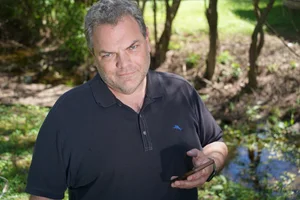
Shipwrecks, Coca-Cola and the Stories We Forgot: A Conversation with Larry Jorgensen
In November 1926, a ship carrying 240 brand-new Chrysler automobiles was driven onto a reef in Lake Superior, leaving its crew stranded in brutal Upper Peninsula weather and creating a rescue story that somehow managed to slip almost completely out of American memory. I had never heard of the City of Bangor, which, naturally, made me want to know why.

Shipwrecked and Rescued by Larry Jorgensen
That is where Larry Jorgensen comes in. Larry spent most of his professional life in print, radio, television, wire service, and freelance journalism, which apparently trained him to notice the stories everybody else walks past. When I interviewed him, we started with Shipwrecked and Rescued, his book about the City of Bangor, but before long we were talking about Coca-Cola history, Michigan's Upper Peninsula, the Green Bay Packers, and what happens when a journalist never quite loses the urge to ask one more question.
Larry Jorgensen has spent most of his professional life doing something I understand pretty well: finding a story, figuring out why it matters, and then trying to tell it in a way that makes somebody else care. His career has moved through print, radio, television, wire service, and freelance journalism, which means he has spent a considerable amount of time asking questions, chasing information, and probably discovering that the story you start looking for is not always the one you end up finding.
When I interviewed Larry, we talked about his books, his years in journalism, Michigan's Upper Peninsula, the Green Bay Packers, Coca-Cola, and a Great Lakes shipwreck that most people have probably never heard of. On paper, those subjects do not have much in common, but after talking with him for a while, the connection became fairly obvious. Larry is interested in the stories that somehow survive without becoming famous, the ones sitting in an old newspaper, a local memory, a forgotten event, or a place people drive past without realizing anything interesting ever happened there.
Shipwrecked and Rescued
One of those stories became Shipwrecked and Rescued: The "City of Bangor", Larry's book about the 1926 wreck of the City of Bangor off Michigan's Keweenaw Peninsula. The ship was carrying a crew of 23 and 240 new Chrysler automobiles when a November storm drove it onto a Lake Superior reef, leaving the crew facing deep snow, brutal temperatures, and a rescue story that somehow never became as famous as the circumstances probably deserved.

Shipwrecked and Rescued by Larry Jorgensen
Larry's connection to Michigan's Upper Peninsula helped lead him to the story, and what interested me was not simply that he had found another Great Lakes shipwreck to write about, because the Great Lakes have certainly provided enough of those, but that he found a story with people still buried inside it. History has a bad habit of reducing enormous human experiences into dates, locations, and a couple of sentences. A ship wrecks, people survive or they do not, somebody writes down the year, and eventually the whole thing becomes trivia. The people who were actually there did not experience trivia. They experienced cold, fear, confusion, bad decisions, good decisions, luck, and whatever came next.
That is where Larry's journalism background becomes useful. He does not simply tell you that the City of Bangor wrecked. He goes looking for the people involved, the rescue, the circumstances surrounding the ship, and even what happened to those automobiles afterward. His research also brought together a substantial collection of historical photographs, which matters with a story like this because sometimes seeing the environment explains more than another page of description ever could.
The enthusiasm he had for the story was obvious when we talked, and I believe that tells you quite a bit about the kind of writer he is. You can research something because you have an assignment, or you can research it because you genuinely need to know what happened. The second kind usually produces the better story.
Following the Coca-Cola Trail
Larry's curiosity does not stay in one lane, which becomes pretty obvious when you move from Great Lakes shipwrecks to The Coca-Cola Trail. Instead of simply telling the corporate history of one of the most recognizable brands on Earth, he followed the people and places that helped build the history around it.
Most of us know Coca-Cola as a bottle, a logo, an old commercial, or something that has existed for so long that we rarely stop to wonder how it became woven into American life in the first place. Larry went looking behind the logo. That meant finding bottling plants, communities, buildings, businesses, signs, collectors, and the people connected to something everybody recognizes but very few people have ever bothered to investigate beyond the obvious version.
That is probably what I enjoyed most about hearing him talk about it. Coca-Cola is already famous, so writing another general history of the company would be easy enough. Looking for the smaller stories surrounding it requires a different kind of curiosity because you have to assume that the interesting part may be somewhere nobody else thought to look.
Larry eventually followed the first book with Return to the Coca-Cola Trail, continuing the same basic idea through additional people and places connected to the company's history. His website, The Coca-Cola Trail, is still the best place to explore that side of his work and learn more about the books.
Michigan's Upper Peninsula
Michigan's Upper Peninsula kept finding its way back into our conversation, partly because of Larry's connection to the region and partly because places like that tend to accumulate stories differently. Large cities document themselves constantly. Smaller communities often preserve history through local newspapers, family stories, old photographs, buildings, artifacts, and people who simply remember what happened.
That can make regional history easy to overlook from the outside and almost impossible to forget if you grew up around it. Larry seems comfortable in that space, where something can be historically important without ever becoming nationally important. The City of Bangor is a good example. The wreck did not need to become one of the world's most famous maritime disasters to matter to the people involved or to the region where the story survived.
I am increasingly interested in that kind of history myself. There is plenty of material about presidents, wars, enormous corporations, and events everybody was taught in school, but sometimes the more interesting question is what happened twenty miles away that nobody bothered to put in the textbook.
Then We Talked About the Packers
Eventually the conversation wandered into football because Larry had also worked in television news in Green Bay, and you cannot spend much time around Green Bay without eventually running into the Packers.
His perspective was different from somebody simply talking about a favorite football team because he had seen that world while working in television news. The Packers are not just another professional team sitting inside a city that happens to host them. In Green Bay, the organization and the community are tied together in a way that is difficult to duplicate anywhere else in professional sports, and Larry had the benefit of seeing some of that relationship from the newsroom side.
It also reminded me how strange a journalism career can become when you look backward at it. One day you are dealing with news, another day sports, another day a community story, and years later one of those assignments becomes useful when you are writing a book about something completely unrelated. Eventually you realize you have spent a career collecting pieces without knowing which ones you will need again.
A Journalist Who Never Quit Looking
What stayed with me after interviewing Larry was not one particular shipwreck fact, a piece of Coca-Cola history, or even one Packers story. It was the fact that he still seemed curious.
That sounds like a small thing until you have spent enough time around people who make their living dealing with information. It is entirely possible to work around stories for so long that they become inventory. Another deadline, another interview, another page to fill, another piece to finish before moving on to the next one. Larry seems to have carried something different out of journalism. Instead of losing the habit of asking questions, he turned it toward whatever happened to catch his attention.
That is how a Great Lakes shipwreck becomes Shipwrecked and Rescued. It is how Coca-Cola becomes a trail worth following. It is how Michigan's Upper Peninsula becomes more than scenery, and how years spent working in Green Bay can eventually become another set of stories worth remembering.
There are plenty of famous stories available if that is what somebody wants to write about. Larry Jorgensen seems much more interested in the ones sitting just outside the spotlight, waiting for somebody curious enough to notice them.
I understand the attraction.
Sometimes the best stories were never really lost. Nobody bothered to ask about them.